

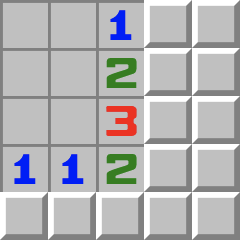
Step 0 / 2
Step 0 is the starting board. Select a dot or an instruction to continue.
0 of 2 deductions shownPattern B1
Tools · Complete pattern field manual
Study every board state in order. Each dot selects one visual step, and the instruction list reveals exactly how far the deduction has progressed.
How the board works
Every revealed number counts mines in the eight touching squares. Open every safe square to win. A flag is a note that marks a forced mine; it does not clear the board by itself.
Library coverage
Pattern group · 10 entries
Step 0 is the starting board. Select a dot or an instruction to continue.
0 of 2 deductions shownPattern B1
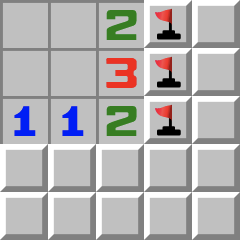
Step 0 is the starting board. Select a dot or an instruction to continue.
0 of 2 deductions shownPattern B2
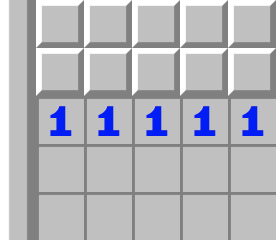
Step 0 is the starting board. Select a dot or an instruction to continue.
0 of 4 deductions shownPattern 1-1
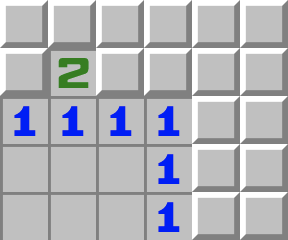
Step 0 is the starting board. Select a dot or an instruction to continue.
0 of 4 deductions shownPattern 1-1P
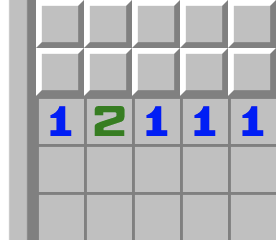
Step 0 is the starting board. Select a dot or an instruction to continue.
0 of 4 deductions shownPattern 1-2
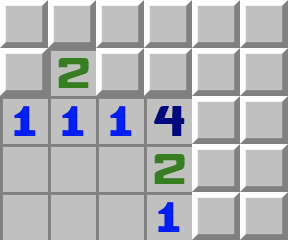
Step 0 is the starting board. Select a dot or an instruction to continue.
0 of 4 deductions shownPattern 1-2P
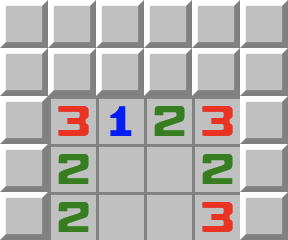
Step 0 is the starting board. Select a dot or an instruction to continue.
0 of 4 deductions shownPattern 1-2C
Classic version of the 1–2 pattern:
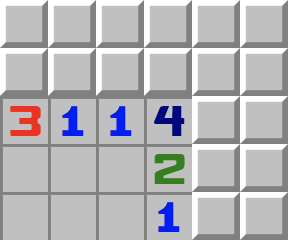
Step 0 is the starting board. Select a dot or an instruction to continue.
0 of 4 deductions shownPattern 1-2CP
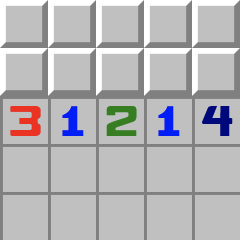
Step 0 is the starting board. Select a dot or an instruction to continue.
0 of 3 deductions shownPattern 1-2-1
The 1–2–1 pattern has one solution. Actually, it's just a combination of two 1–2 patterns:
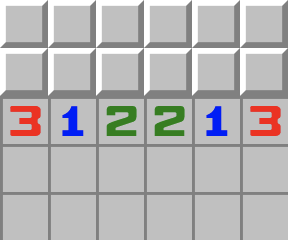
Step 0 is the starting board. Select a dot or an instruction to continue.
0 of 3 deductions shownPattern 1-2-2-1
The 1–2–2–1 pattern has one solution. It's also just a combination of two 1–2 patterns:
Pattern group · 3 entries
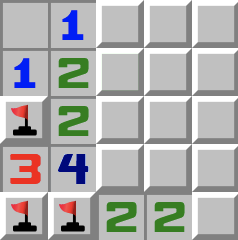
Step 0 is the starting board. Select a dot or an instruction to continue.
0 of 3 deductions shownPattern 1-1R
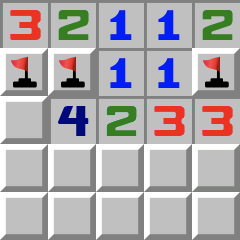
Step 0 is the starting board. Select a dot or an instruction to continue.
0 of 3 deductions shownPattern 1-2R
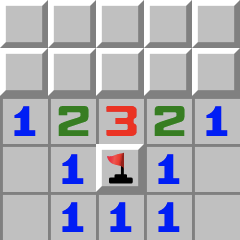
Step 0 is the starting board. Select a dot or an instruction to continue.
0 of 1 deductions shownPattern 1-2-1R
Pattern group · 3 entries
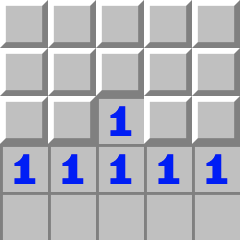
Step 0 is the starting board. Select a dot or an instruction to continue.
0 of 4 deductions shownPattern H1
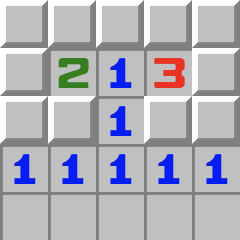
Step 0 is the starting board. Select a dot or an instruction to continue.
0 of 4 deductions shownPattern H2
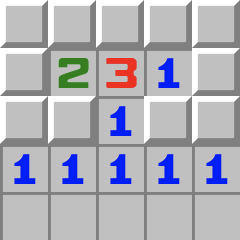
Step 0 is the starting board. Select a dot or an instruction to continue.
0 of 4 deductions shownPattern H3
Pattern group · 5 entries
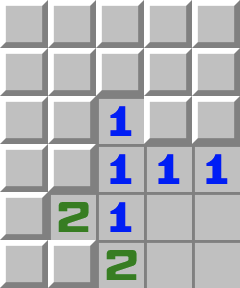
Step 0 is the starting board. Select a dot or an instruction to continue.
0 of 4 deductions shownPattern T1
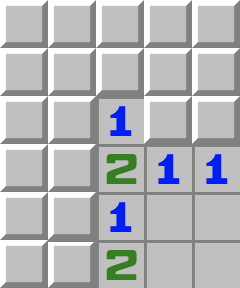
Step 0 is the starting board. Select a dot or an instruction to continue.
0 of 5 deductions shownPattern T2
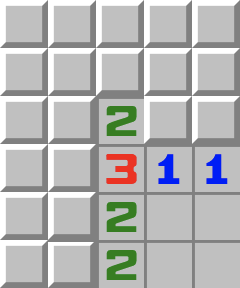
Step 0 is the starting board. Select a dot or an instruction to continue.
0 of 5 deductions shownPattern T3
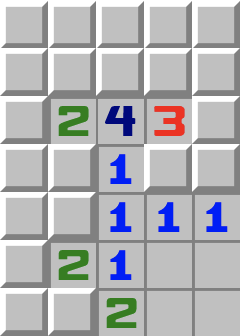
Step 0 is the starting board. Select a dot or an instruction to continue.
0 of 5 deductions shownPattern T4
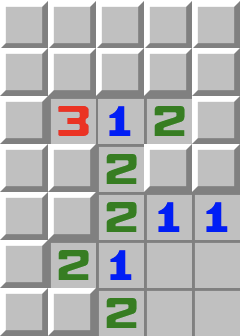
Step 0 is the starting board. Select a dot or an instruction to continue.
0 of 5 deductions shownPattern T5
Pattern group · 5 entries
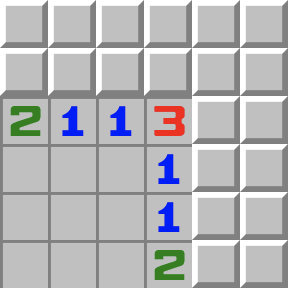
Step 0 is the starting board. Select a dot or an instruction to continue.
0 of 7 deductions shownPattern 1-3-1
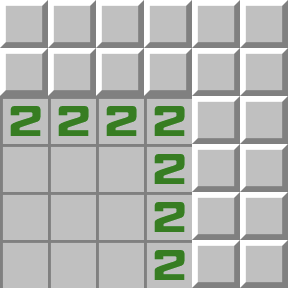
Step 0 is the starting board. Select a dot or an instruction to continue.
0 of 7 deductions shownPattern 2-2-2
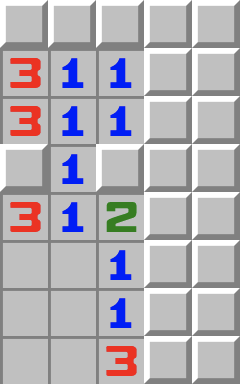
Step 0 is the starting board. Select a dot or an instruction to continue.
0 of 6 deductions shownPattern 1--2--1
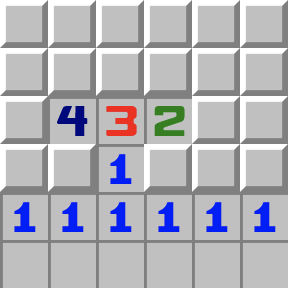
Step 0 is the starting board. Select a dot or an instruction to continue.
0 of 6 deductions shownPattern TP
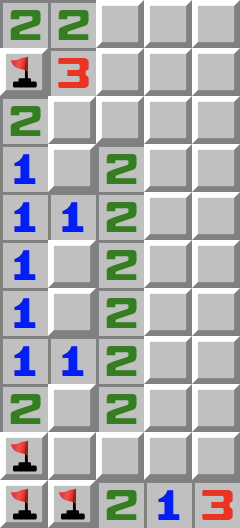
Step 0 is the starting board. Select a dot or an instruction to continue.
0 of 11 deductions shownPattern DC
Usually long dependency chains can be resolved by parsing from both sides.
Pattern group · 2 entries
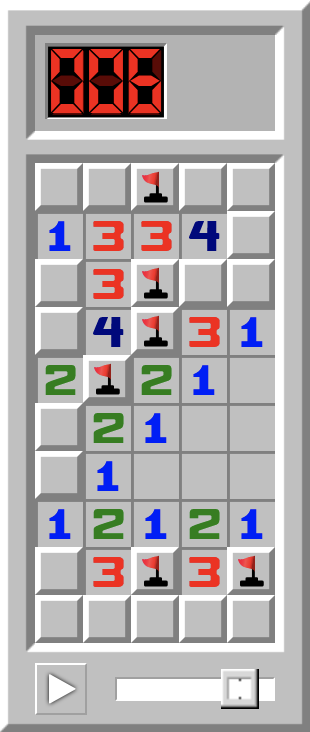
Step 0 is the starting board. Select a dot or an instruction to continue.
0 of 6 deductions shownPattern MC1
When the game comes to an end, you can determine empty cells by the number of remaining mines:
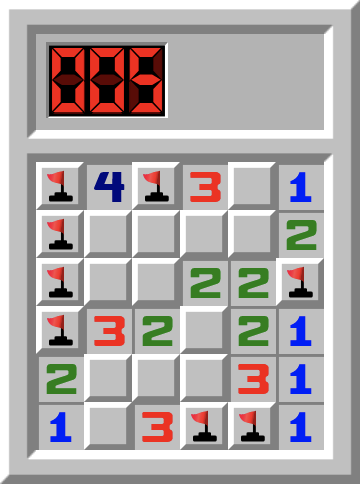
Step 0 is the starting board. Select a dot or an instruction to continue.
0 of 4 deductions shownPattern LTC
In rare situations, it may be necessary to enumerate possible combinations:
Training loop
Start on a beginner board, name the pattern before every flag, then work through the complex chains and last-turn counting drills.
Start minesweeper practice